


How to set up a POP3 account in Mac Mail
This article will demonstrate how to setup a new POP account in Mac Mail.
Please note that Names.co.uk does not support 3rd party email applications, and therefore these guides are provided out of courtesy.
Before proceeding with the setup of your email account we recommend that you login to Webmail first using your email address and email password. This is to ensure that you are using the correct login credentials.
If you are unsure of your email password please use the following guide to reset it:How to reset my email password
You will also need to ensure that you have purchased our Authenticated SMTP package – without it you will be unable to complete the setup. To upgrade to this service please either use the Upgrade Options within your Control Panel, or call our team on 0345 363 3634.
Now that you know your email password and have activated Authenticated SMTP, let’s proceed with the setup in Mac Mail.
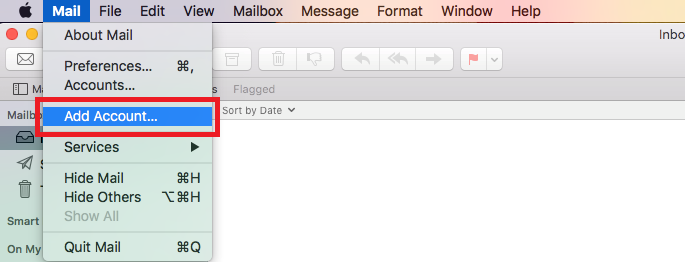
Once you have opened Mac Mail, click on Mail > Add Account
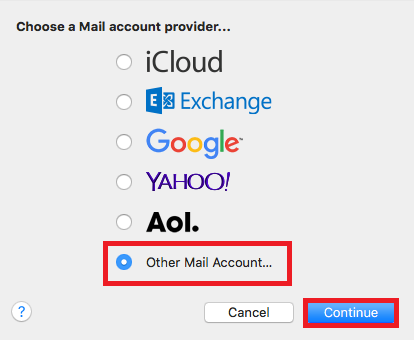
Next select the option for Other Mail Account, and click Continue.
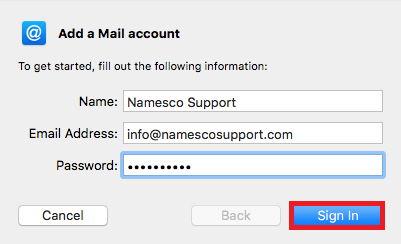
Enter a Display Name, your Email Address and your Email Password, and click Sign in.
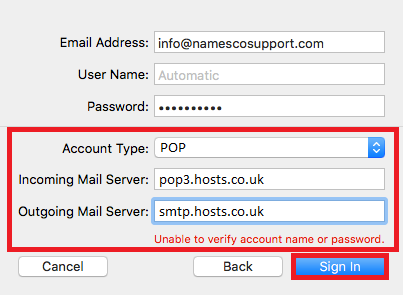
You will now need to enter the following server information, and click Sign in.
Your POP email account setup is now complete.
Important Note – Moving from POP3 to IMAP
Switching an email account from POP3 to IMAP changes how your emails are stored, synchronised, and deleted.
With IMAP, emails remain stored on the mail server and are mirrored across all devices. Any action taken in one location — such as deleting, moving, or organising messages — will automatically apply everywhere. Deleting an email on your phone, for example, will also delete it from your desktop and webmail.
Under POP3, emails are downloaded to a single device and can be removed from the server. Deleting a message only affects that device, which can create differences between devices but also prevents global deletion.
Changing from a POP3 connection to IMAP will result in existing locally stored emails not being present on the server, and messages can be permanently deleted or lost if they are not backed up beforehand, depending on how the email client is configured.
To prevent permanent data loss, you must create a full backup of your mailboxes before making this change. If you are unsure how to back up your emails, additional guidance or managed assistance may be available.